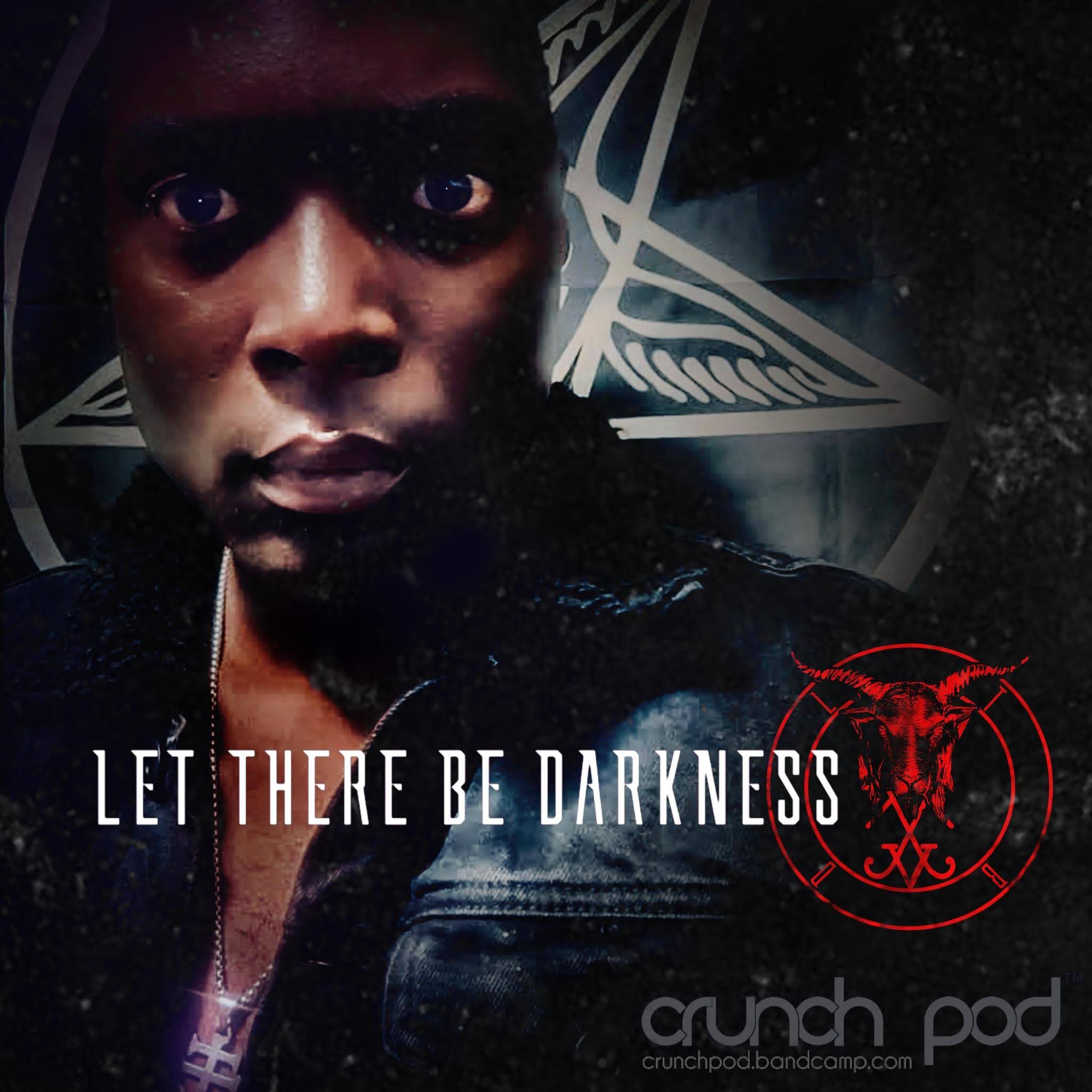
There are artists who push boundaries, and then there are artists who obliterate them entirely. Charles Richburg, known professionally as Let There Be Darkness, is firmly in the latter category. The Los Angeles-based musician has carved out a wholly singular space in the underground music world with a self-coined genre he calls SDM — Satanic Dance Music — and the world is beginning to take notice.
Who Is Let There Be Darkness?
Richburg is an African American goth artist whose sound draws deep from the wells of industrial music’s most iconic acts. Picture early Nine Inch Nails and Skinny Puppy filtered through Satanic and anti-Christian lyrics, and you begin to get a sense of what Let There Be Darkness offers listeners. It is confrontational, atmospheric, and undeniably compelling. Influences like Velvet Acid Christ round out a palette that is unmistakably rooted in the darkest corners of alternative music — yet the result feels entirely fresh.
His journey to signing with Crunch Pod, one of the underground’s most respected industrial labels, reads almost like a story he might write lyrics about. For years, finding producers willing to take on his vision proved elusive. The turning point came while helping a longtime friend decorate a newly opened Hollywood restaurant. A casual conversation, a few songs played on the spot, and an introduction to Karloz M. — the force behind the industrial and power noise outfit Manufactura — changed everything. After hearing “The Devil, the King,” Karloz M. was sold, and Richburg had both a label home and a creative collaborator.
Satan’s Property and the Making of a Dark Masterpiece
That partnership yielded Satan’s Property, Richburg’s most ambitious work to date and an album he describes without hesitation as one of the greatest ever made. The concept is as audacious as it sounds: inspired by gospel artist Kirk Franklin’s landmark 1997 record God’s Property, Richburg envisioned an industrial album built entirely around clean vocals and Satanic lyrics — something he notes has never been done before. The effect, he says, is intentional disorientation: listeners feel as though they are in church, except the congregation is worshipping somewhere else entirely.
The recording process left its own strange mark. On a track called “Soul Contract,” Richburg sings the line “I cut myself and bleed for you.” Shortly after finishing the session, while cutting watermelon in his kitchen, he sliced open his left thumb. Whether coincidence or something more, it is the kind of detail that feels tailor-made for the mythology of Let There Be Darkness.
The philosophy behind the music is more nuanced than the imagery might suggest. Richburg draws on years spent studying the writings of Anton LaVey and the Church of Satan, a tradition he sees as blending pragmatic philosophy with dark symbolism rather than literal devil worship. “There is no god, no devil. No heaven and no hell,” he explains. “We all have good and evil within us — and if Satan does exist, he would just want you to dance.”
What’s Next for the SDM Pioneer
Richburg is already deep into work on a follow-up album, promising more Satan, more blasphemy, and more darkness. Beyond music, he has maintained a parallel career as an actor since 2006, with credits spanning film, television, and music videos — all catalogued on his IMDb page under Charles Richburg.
For those ready to step inside the world he has built, Let There Be Darkness is on Spotify and you can follow his journey on Instagram. One listen to Satan’s Property makes clear this is not a gimmick — it is a genuine artistic vision executed with rare conviction, and it is only getting darker from here.